The statement by the High Representative of the Union for Foreign Affairs and Security Policy, Federica Mogherini, was sobering for many people - commenting on the possibility to tighten the EU sanctions against Russia because of the Syrian crisis, Mogherini noted that none of the European Union’s member states has proposed introducing new sanctions. Thus, the head of the European diplomacy signaled that speculations on the matter in the world media do not have a real basis. At least at this stage.
The authoritative German newspaper Frankfurter Allgemeine Zeitung, citing an unnamed source close to the German Chancellor Angela Merkel, was the first to report about a possible tightening of sanctions. Given the high journalistic standards and the newspaper's awareness, it is not a simple "newspaper canard". Probably, such discussions are actually underway in the government corridors in Berlin. The faction of transatlanticism supporters, which is represented in the German government very strongly, would undoubtedly support such Merkel's initiative. According to the same report by Frankfurter Allgemeine Zeitung, President Barack Obama promised the EU to support "a strong reaction", if the Europeans are able to agree among themselves about the development of new sanctions.
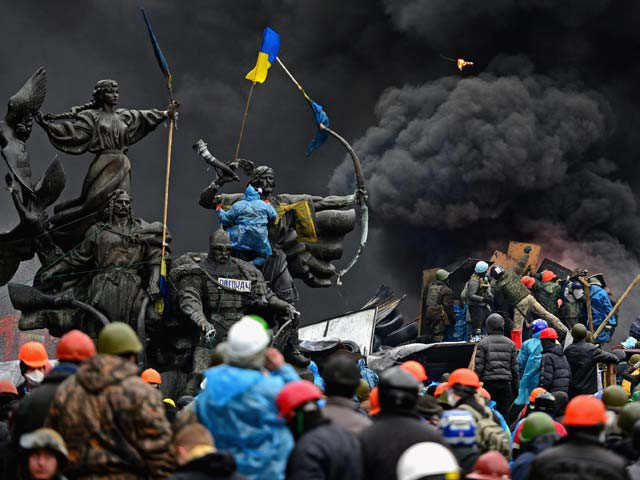
But in reality, the preconditions for the introduction of new pan-European sanctions against Russia because of the Syrian issue have not existed objectively. It should be borne in mind that the anti-Russian sanctions were imposed by the EU because of the Ukrainian conflict. Then Europeans, which played a significant role in the events surrounding Ukraine [the refusal of the ex-President Viktor Yanukovych to sign the association agreement with the EU was the 'trigger'] could not remain aloof from the erupted conflict. Such a position would have completely buried all perspectives and ambitions of the EU to become a full-fledged geopolitical player not only on the international arena, but even on its own continent. The Ukrainian conflict is a consequence of the struggle for spheres of influence between the EU and Russia, and the fact that Europeans have made a bet on a policy of sanctions can be explained by the logic of foreign policy confrontation and the articulation of their interests.
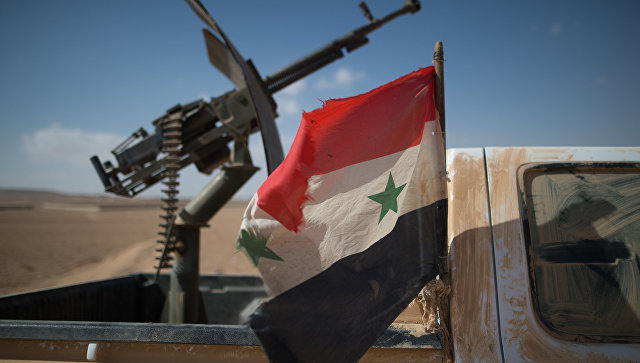
Syria is a completely different issue. It is not a partner of the EU, Russia is on the Syrian territory at the official request of Damascus, and it did not annex any part of the Syrian territory. Yes, Europe is suffering from the effects of the Syrian conflict due to a preponderance of migrants from the Middle East, however, the primary responsibility for failing to deal with the problem of migrants lies with not the foreign players, but with the EU itself. The problems in this area can be listed for a long time, 'the Dublin Regulation' on reception of refugees in the EU simply does not work with such huge migration flows; the introduction of resettlement quotas has stalled because of the tough position of a number of Central and Eastern European countries; the system of protection of the EU's external borders is not regulated. The slowness of Brussels bureaucracy, the opposition of national governments and problems in relations with Turkey also can be mentioned. That is, it is almost impossible to make Russia responsible for the migratory crisis in Europe and thus to justify a possible tightening of sanctions against Russia by the European political interests. In addition, Russia has joined the Syrian campaign only in the autumn of 2015, already after the start of the migration crisis in Europe.
The United Kingdom has traditionally been one of the 'hardliners' towards Russia in the EU. However, after the decision to withdraw from the European Union, London has became a "lame duck" of the EU and now it is significantly limited in its ability to influence the European policy. The German Chancellor Angela Merkel is also far from being at the peak of her popularity, and it is not the fact that she would be supported in the issue of toughening the anti-Russian sanctions by the allied CSU party, led by the Bavarian Prime Minister Horst Seehofer, who recently visited Moscow with a large economic delegation. Not to mention the Social Democrats presented in the ruling coalition, who clearly opposed the new sanctions against the Russian Federation (the statement of the German Foreign Minister, Social Democrat Frank-Walter Steinmeier was very revealing).
But there is another side of the issue - the theme of tightening of the anti-Russian sanctions has been successfully thrown into the information community and probably will be discussed in parallel with the continuation of the Syrian drama, there is no bottom to which. The aggravation of the conflict in Ukraine may also play a role in the issue of new sanctions - and it is impossible to exclude such a scenario after the murder of the famous commander of the self-proclaimed Donetsk Peoples Republic’s defense forces, Arsen Pavlov ('Motorola'). The confrontation will continue actively in the information space, and there is no doubt that it will be extremely tough. The first portent - the main Russian broadcaster abroad - TV channel Russia Today - said its bank accounts in the United Kingdom were blocked.