The exhibition ‘Alanika. The method of experiment’, organized by the North-Caucasian branch of the State Center for Contemporary Art in the framework of the Sixth Moscow Biennale of Contemporary Art, has opened in the Moscow exhibition center ‘Worker and Kolkhoz Woman’. The exhibition presents the results of a nine-year work of the Alanika - symposium in Vladikavkaz, which aim is a dialogue of the artists, critics and the audiences about the contemporary art and the transformation of their world’s perception.
The modern sub-genres of art, which include the workshops, master classes and the performances, allow you to turn the exhibition from the contemplative to the interactive, educational event. Artists from different countries, areas and times are exchanging the experiences and the ideas, so Alanika is also a school of the modern art created here and now. The Worker and Kolkhoz Woman in Moscow presents to the visitors a huge collection of the works that have never left the North Ossetia before – the best works and the most unexpected results of the symposium.
There are the Ossetian artists, the Dagestani masters, the Chechen experimenters and many other representatives of the contemporary art from Azerbaijan, Georgia, Turkey, Iran and other countries are among the participants of the exhibition.

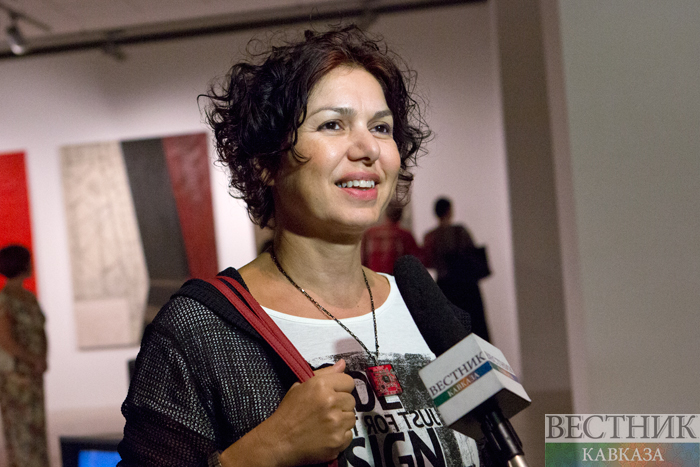
“The nine-year work of the International Symposium ‘Alanika’ is represented here. Unfortunately, we could not bring all the work here. There is a certain selection, sampling, and it seemed to us important to bring these works here, they are the most vivid, accent, they are representing not only Ossetia, but in general the North Caucasus as a whole. Therefore, there are works that show various events that happened, for example, in Beslan, absolutely terrible tragedy, or nature, or people, or some things connected just with the emotion of the artist who first came to the mountains, who was in Ossetia for the first time. There are three floors, the exhibition is large, it is on three floors, represented by 42 artists. The works are made entirely in various techniques and technologies, from painting, sculpture, installation, video to conceptual art, object. Almost all forms of art are represented here,” Yevgeny Umansky, Art-director of the Baltic branch of the State Center for Contemporary Art, curator, artist, told Vestnik Kavkaza.
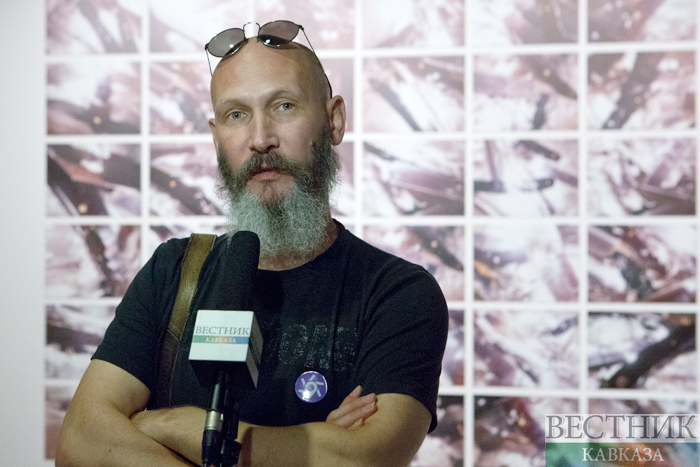
“This Exhibition is, in fact, demonstrate the fact that today there is a great collection, the collection of contemporary art, which is the collection of the National Centre for Contemporary Art, of its northern branch. And part of this collection is presented in this interesting building, the museum center "Worker and Kolkhoz Woman’’. I personally myself as an artist proud that my work is presented here. This work is a video projection, this video, which was created in Vladikavkaz, two years ago, when I was a participant of the symposium where Beral Madra was a curator, the famous Turkish curator. My work, I did not plan to do it, but it turned out that I was very impressed with the recent history and its facts. My work is related to the tragedy in Beslan. This was my first introduction to the international symposium ‘Alanika’ , to Vladikavkaz, and Ossetia. I was impressed not only by the tragic events that occurred there not so long ago, I was even more impressed with the great traditions of this region and the people, and the highest cultural and some human atmosphere that is there. Maybe that's why the very interesting partnership has started,” Sabina Shikhlinskaya, Zausluzhenny Artist of Azerbaijan, told Vestnik Kavkaza.
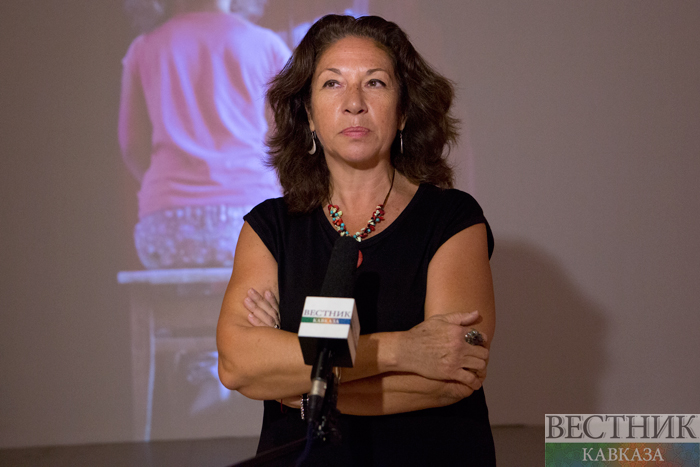
“There are two ideas in my work First, today, at the pace in which we live, we are losing the culture of reading books, culture of knowledge. We just watch TV, what we are shown. Second, my work is called "Frozen channels," that means, we are looking at what we are shown. I have been in Georgia, Azerbaijan and other countries for many times. I really liked the South Ossetia, it was very interesting. I have a lot of positive impressions from Alanika. I think that is a very useful and important workshop for the region. Everything necessary was provided to the participants. It is also very important. I think that the creators have done an excellent job,” Yieshim Aga Oglu, an artist, said.