
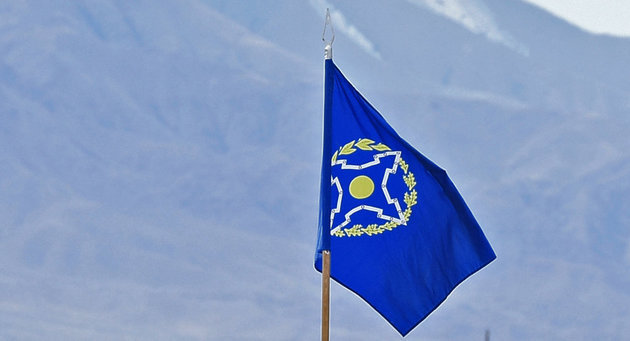
The current Armenian leadership is moving further away from the Collective Security Treaty Organization (CSTO) countries, pursuing its own ambitious interests, including in the Azerbaijani-Armenian conflict issue. The 20 years of the country's membership in the organization (the CSTO was established on May 14, 2002 by Armenia, Belarus, Kazakhstan, Kyrgyzstan, Russia and Tajikistan) showed that Armenia will not be able to achieve its militaristic plans using others.
The republic's chairmanship in the CSTO did not help the country's leadership in implementing these plans either, when permanent and plenipotentiary representative of Armenia to the CSTO Viktor Biyagov was elected chairman of the Permanent Council for three years on October 12, 2021, and Prime Minister Nikol Pashinyan took over as chairman of the Collective Security Council CSTO. Yerevan clearly tried to use its chairmanship in the organization to achieve its own goals after the aggravation of the situation in the Karabakh conflict zone in the autumn of 2020.
Earlier, Armenia's Former Prime Minister Aram Sargsyan said that the country needs to withdraw from the CSTO. As the politician explained, this will give Yerevan the opportunity to receive $300-400 million of military assistance from the West. Sargsyan also noted that the CSTO does not fulfill its obligations in ensuring the security of Armenia, and its membership in the organization does not allow the country to receive more serious military support.
Aram Sargsyan is one of the supporters of Armenian Prime Minister Nikol Pashinyan, who once stated that the authorities were not considering the option of withdrawing from the CSTO and believe that this structure should be actively involved in ensuring regional security. “I don’t think that Armenia will ever consider quitting CSTO. This organization is an important platform for our strategic relations with Russia. Making use of our presidency in the organization, we should work to make CSTO an active participant in ensuring security in the region,” he noted back then.
However, Pashinyan noted that some of the countries included in the organization signed an agreement with Turkey and Azerbaijan on the strategy of the Turkic world. As for Russia, he stressed that the Russian Federation is not an enemy of Azerbaijan and therefore is interested in a peaceful solution to the conflict in the region, and Armenia does not want Russia or any other CSTO member to become embroiled into a conflict with Azerbaijan, stressing that all actions to resolve the conflict must be carried out "peacefully" and by political instruments.
In early September, Armenian Defense Minister Suren Papikyan went to the United States to improve relations. The minister's secret trip to the Pentagon was a clear demonstration that Yerevan has an alternative. Armenia thereby seeks to show that if Moscow and Ankara continue their pressure, then Yerevan will respond with cooperation with Russia's main geopolitical opponent.
However, today's provocation on the border between Azerbaijan and Armenia, initiated by Yerevan, radically changed the situation, and the Security Council of Armenia decided to officially appeal to Russia, the CSTO and the UN Security Council.
"The decision was made after Armenian Prime Minister Nikol Pashinyan held a session of the country's Security Council to formally appeal to the Russian Federation in order to implement the provisions of the Treaty of Friendship, Cooperation and Mutual Assistance," the statement says. statement of the press service of the Armenian government.
Armenia, of course, has the technical possibility of withdrawing from the CSTO - the agreement will be updated next year. But it is up to its management to decide whether to update it or not.





