The Washington Post reported that U.S. Secretary of State Hillary Rodham Clinton on Friday urged China to play a responsible role in the world by respecting human rights and helping to deal with challenges posed by Iran and North Korea’s nuclear programs and violence in Syria and Sudan and South Sudan. As the two countries scrambled to resolve a diplomatic crisis over a blind Chinese legal activist who sought shelter at the U.S. Embassy in Beijing, Clinton did not mention Chen Guangcheng by name, but said she raise individual human rights cases with China. China’s top diplomat Dai Bingguo called the talks a “tremendous” success with a candid exchange of views. He said human rights were discussed but there are differences. Clinton specifically implored China to support international efforts to persuade North Korea to end provocative actions, get Iran to prove its nuclear program is peaceful and end fighting in Syria and two Sudans.
The same agency published the article which says that al-Qaida recognizes the importance of Iran’s role in the region and the need to keep some level of dialogue. The papers — seized in last year’s raid on bin Laden’s Pakistan hide-out and posted online Thursday by the U.S. Army’s Combating Terrorism Center — portray al-Qaida’s relations with Iran as clouded by deep mutual distrust and sharply divergent interests. A June 2009 al-Qaida memo — possibly to bin Laden — refers to the Iranian government as “criminals” in a no-holds bashing of its opaque and unpredictable policies. In one narrow sense, al-Qaida and the West share this much: exasperation over Tehran’s shifting and often contradictory messages that extend all the way to talks over its nuclear program. The full extent of the interplay between Iran and al-Qaida remains unclear to Western policymakers. But the newly disclosed documents reinforce the long-held consensus that there is little common ground.
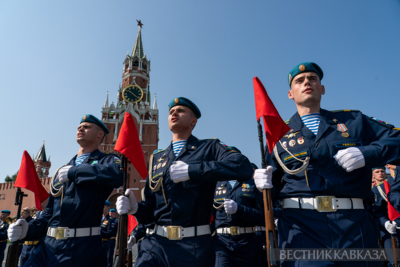
The New York Times reported that at least 13 people were killed and more than 100 were wounded in a double bombing at a police station in Russia’s tumultuous North Caucasus region late Thursday night, officials said, a stark reminder of the challenges facing Vladimir V. Putin in the region as he prepares to take over the presidency next week. Mr. Putin, who is finishing a second turn as prime minister, did not comment Friday on the attack. Though officials have had some success dampening the violence in the North Caucasus over the years, the simmering Islamist insurgency that began in the ashes of Chechnya remains potent. Attacks targeting police and government officials occur almost daily, and civilians are also frequently caught up in the bloodshed.
The Turkish information agency Hurriyet reported that Turkey’s president is replacing the chief of general staff as the host for Victory Day celebrations on August 30, according to a new regulation which would further curb the military’s profile. Under the regulation, the president will both receive the official greetings and host the Victory Day reception in the evening. Both events have so far been led and hosted by the chief of staff at the military’s headquarters and guesthouses. The new protocol for Victory Day, the principal holiday honoring the army, comes as part of a regulation drawn up following a series of meetings led by the presidency’s general-secretariat to review and update the way national holidays and commemorations are held.
World press on Iran, Russia and Turkish internal policy (May 4, 2012)
2920 views