
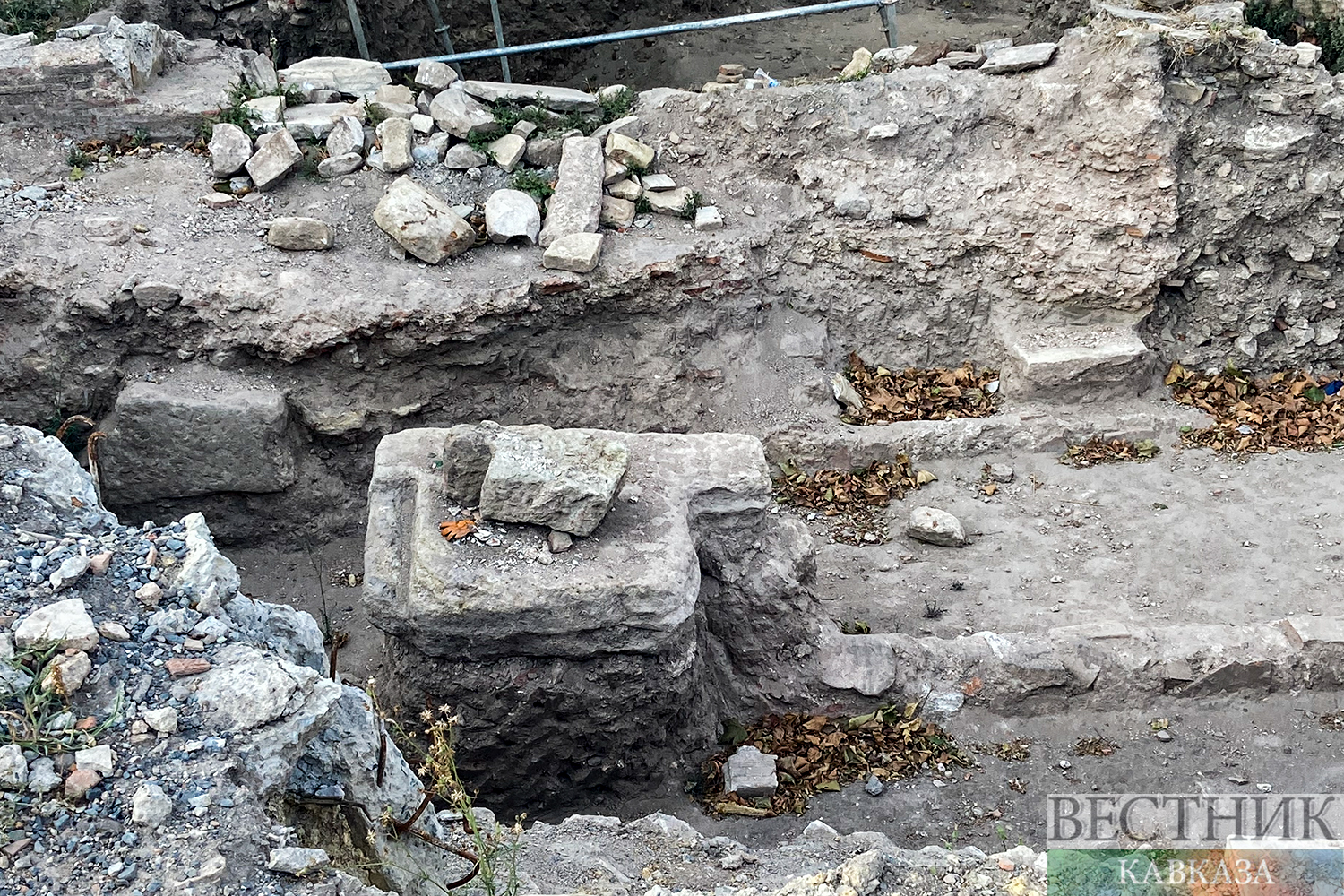
Five iron weights shaped like letters and a balance scale, estimated to be around 1,600 years old, have been unearthed in the archaeological excavations carried out at the ancient city of Uzuncaburç in Türkiye's Mersin.
Located 30 km north of the Silifke district, the ancient city continues to be the focus of excavations led jointly by the Ministry of Culture and Tourism and Mersin University.
The ongoing work is conducted by a team headed by professor Ümit Aydınoğlu from MEÜ’s Archaeology Department.
The excavations aim to bring to light the historical artifacts of Uzuncaburç, which is known for its colonnaded streets, temples, monumental fountains and theater.
The team discovered five iron weights shaped like letters and a balance scale during the excavation of one of the two colonnaded streets running through the center of the ancient city. These artifacts are believed to date back approximately 1600 years.
Aydınoğlu noted that numerous shops were uncovered in this area, along with significant materials such as coins and cutting tools, which provide valuable data on the trade activities of the ancient city.
"The weights are made in the form of letters from the ancient Greek alphabet. Each weight corresponds to multiples of certain standard weights. At that time, a weight system called "litra" was used. Our weights range from half a litra up to 5 litras," Aydınoğlu said.
In modern measurements, this corresponds to roughly between 150 grams and 1.5 kilograms.





