
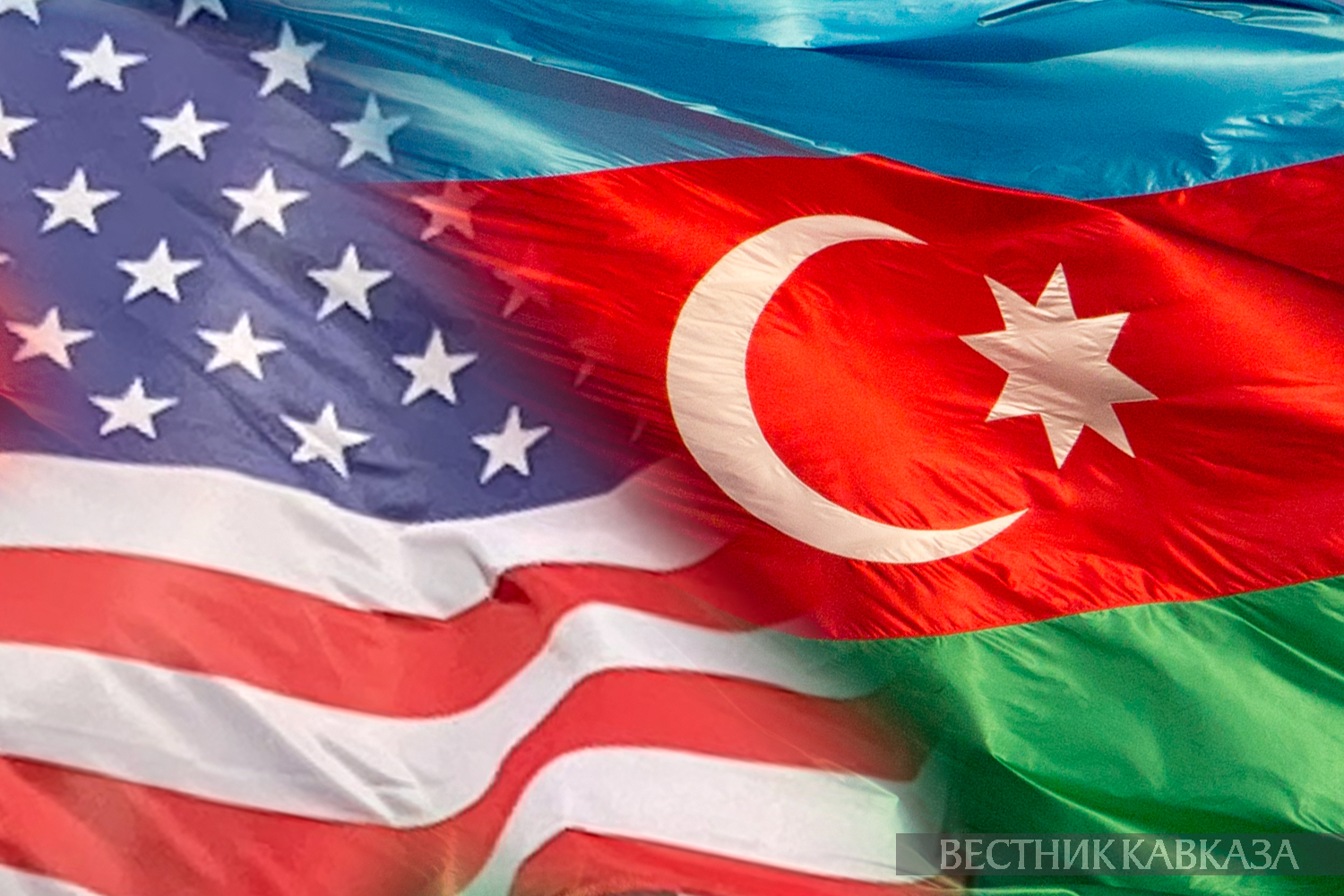
The anti-Azerbaijan lobby in the United States has not abandoned its plans to destabilize the South Caucasus. Its representatives in Congress have drafted legislation that would prohibit the President from waiving Section 907 of the Freedom Support Act and would require the White House to begin arming Armenia.
Recently, one of the last political groups fighting against stabilization in the South Caucasus - the anti-Azerbaijan lobby in the U.S. - introduced a bill aimed at hindering the development of U.S. policy in the region. Congressmen Frank Pallone and Gus Bilirakis, known for their ties to the Armenian-American diaspora community, introduced legislation to the House of Representatives that would ban the U.S. President from suspending Section 907. The bill is framed as support for the U.S.-Armenia security partnership.
Section 907 and New U.S. Policy
Section 907 of the 1992 Freedom Support Act excludes Azerbaijan from the list of post-Soviet states eligible for U.S. government assistance. The amendment was adopted under the anti-Azerbaijan lobby's pressure in an attempt to facilitate Armenia's military actions during the Karabakh war and its occupation of Azerbaijani territories in Karabakh and Eastern Zangazur. Since then, U.S. presidents have regularly waived the amendment, yet it remains a tool for pressuring Azerbaijan. For instance, President Joseph Biden chose not to waive Section 907 under the influence of the same anti-Azerbaijan lobby in 2023, which was displeased with Azerbaijan's restoration of constitutional order throughout the Karabakh economic region.
Azerbaijan insists that Section 907 must be fully repealed, both due to its inherent injustice - it was imposed against the victimized party, not the aggressor, in the Karabakh war - and because the legislative discrimination against the republic has lost all meaning. The Karabakh war is over, revanchism is impossible, Baku and Yerevan are not in a state of conflict but are actively building bilateral relations without intermediaries, including through border delimitation and establishing initial economic contacts. On August 8, a peace treaty between Azerbaijan and Armenia was initialed in Washington. The attending leaders of the two states, President Ilham Aliyev and Prime Minister Nikol Pashinyan, signed a Joint Declaration affirming their commitment to permanently cement the state of peace in the South Caucasus, which de facto already exists in the region.
U.S. President Donald Trump, whom Ilham Aliyev and Nikol Pashinyan jointly nominated for the Nobel Peace Prize on August 8, has continued his peacemaking foreign policy by once again waiving Section 907. His Republican colleague, Congresswoman Anna Paulina Luna, introduced a bill aimed at repealing Section 907 in early December. Given that Republicans currently hold a majority in both chambers of the U.S. Congress, the bill stands a good chance of passing, especially since Washington intends to implement the "Trump Route" project in the South Caucasus - a logistical connection between Azerbaijan's Zangilan district and the Nakhchivan Autonomous Republic via the Zangezur Corridor through Armenia. The Trump administration is focused on engaging with the region through mutually beneficial cooperation rather than stoking confrontation, and repealing Section 907 would be a logical step in this new U.S. foreign policy course.
The Anti-Azerbaijan Lobby Persists
The Pallone-Bilirakis bill demonstrates that the nationalist-leaning part of the Armenian-American diaspora community has not given up hope for an Armenian revanchism in the Karabakh war and the re-occupation of Azerbaijani territories. While Armenian state policy has undergone radical changes in recent years - with Nikol Pashinyan now promoting the "Real Armenia" concept, which involves abandoning the aggressive nationalist agendas of previous administrations and establishing good-neighborly relations with Azerbaijan and Turkey based on Armenia's objective national interests - the anti-Azerbaijan lobbyists, ignoring the realities of the South Caucasus, continue to push an outdated course aimed at fueling instability in the region.
The text of the bill ignores the actual situation in the South Caucasus. Primarily, it demands that any U.S. assistance to Azerbaijan be conditional on the cessation of hostilities with Armenia, despite the fact that there have been not only no clashes but also no border shootings between the republics for a considerable time. The Armenian Prime Minister has emphasized that there are and will be no battles between the armies. Furthermore, through Pallone and Bilirakis, the anti-Azerbaijan lobby seeks to force Baku to meet conditions that Yerevan is not demanding, including the transportation to Azerbaijan of Armenian citizens who voluntarily emigrated from the Karabakh economic region in the fall of 2023, and the termination of criminal cases against war criminals who led the occupation regime in Khankendi. Armenia does not need any of this for normalizing relations with Azerbaijan, but the lobbyists are acting not in Armenia's interests, but in the interests of their sponsors within the Armenian-American diaspora community.
Moreover, the bill proposes that failure to meet these conditions set by Armenian nationalists in the U.S. should obligate Washington to begin supplying American weapons to Armenia. Thus, the anti-Azerbaijan lobby plans to protect its confrontational approach to the South Caucasus: not only to close off the possibility of peaceful policy in the region for the White House (which is the target of Anna Paulina Luna's initiative to repeal Section 907) but also to force the Trump Administration and all subsequent presidential administrations to contribute to a new destabilization of the Armenian-Azerbaijani situation. As lobbyists for a new war in the South Caucasus still hold seats in the House and Senate, the Pallone-Bilirakis bill has already garnered a number of signatures in Congress.
Armenian nationalists in the U.S. themselves admit that this legislative initiative is a counter-strike in response to Anna Paulina Luna's bill. The Armenian National Committee of America (ANCA) announced the launch of a broad lobbying campaign in Congress to promote the new anti-Azerbaijan document.
What Will Happen to Section 907?
It is worth noting that this year alone, representatives of the anti-Azerbaijan lobby have initiated two bills against Azerbaijan. A March initiative, which called for ending all assistance to the republic, gathered about 60 signatures in the House of Representatives - insufficient to begin consideration in the Foreign Affairs Committee. In September, after Trump's waiver of Section 907, the same lobbyist-congressmen proposed a similar document, which again failed to collect the required number of signatures.
For this reason, the new initiative is also expected to fail, especially since it not only calls for military support to Armenia (which Yerevan is not requesting from Washington) but also seeks to restrict the presidential powers of Donald Trump - something the White House will certainly not allow, given the Republican majority in both houses of Congress.





