
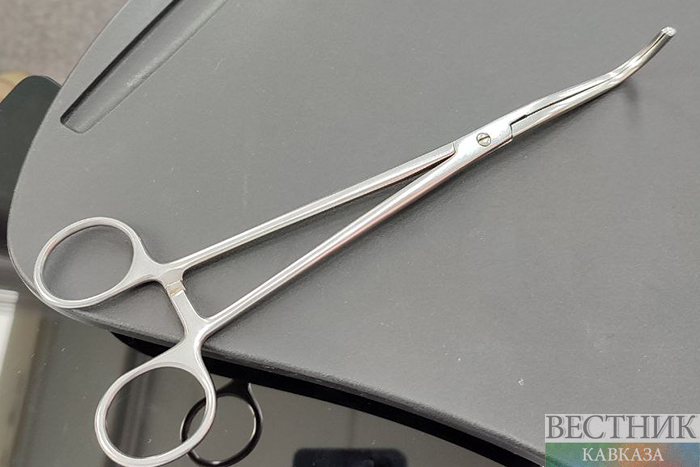
Ten years ago, on September 15, 2015, a branch of the First Moscow State Medical University opened in Baku. Today, it possesses a substantial clinical base comprising fifteen medical centers, dispensaries, research institutes, and clinics. Among these is Mirmemmed Cavadzade Republican Clinical Urology Hospital. This is an article about the man it honors and his significant contribution to the field of urology.
The Baku branch of the Sechenov First Moscow State Medical University was established to improve medical education, expand cooperation with prestigious international centers, and provide training for Azerbaijani citizens at Russian institutions. It fosters medical education based on the cultural and scientific unity and friendly relations between Azerbaijan and Russia.
Why is the hospital named after Cavadzade?
In 1966, in central Baku near the ancient Icheri Sheher quarter, the Republican Clinical Urological Hospital was founded on the initiative and with the direct involvement of urologist Mirmemmed Cavadzade. It became a center for scientific and practical urology and the first major specialized facility of its kind in the Soviet Union. This hospital still has an important role for Azerbaijani healthcare, performing complex surgical procedures, including kidney transplants.
The reconstruction of the old hospital building, its modernization, and the advanced training of its specialists at the world's leading clinics are achievements attributed to Mirmemmed Cavadzade – Doctor of Medical Sciences, Professor, Full Member of the National Academy of Sciences of Azerbaijan, and Rector of Azerbaijan State Advanced Training Institute for Doctors named after Aziz Aliyev.
Cavadzade's name is associated with the development and success of urological science in Azerbaijan. He and his associates laid the very foundation of Azerbaijani urology. Moreover, Cavadzade was not only a physician but also an teacher, making a significant contribution to the training of Soviet urology specialists.
Biography of Mirmemmed Cavadzade
Mirmemmed Cavadzade was born on May 18, 1927, in Lankaran.
At 16, he entered Azerbaijan State Medical Institute and began working as a surgeon immediately upon graduation. A year later, he became deputy chief physician of Astara United District Polyclinic and Hospital.
After another year of surgical work at Lankaran City Hospital, he left to study in Moscow. Under the guidance of the renowned urologist Anton Pytel, he defended his candidate's dissertation on "Ureteral Stones" and became a postgraduate student in the Urology Department of the Second Moscow State Medical University. Following the defense of his doctoral dissertation on "Polycystic Kidney Disease", Cavadzade continued his work at the Second Moscow State Medical University.
Being an highly-skilled 37-year-old urological surgeon, he returned to Baku to head a department at Azerbaijan State Advanced Training Institute for Doctors named after Aziz Aliyev. A few years later, by order of Heydar Aliyev, he was appointed the institute's rector – a position he held for decades until his death.
Cavadzade wrote hundreds of monographs, textbooks, and scientific articles on urology, mentored numerous candidates and doctors of science, as well as highly qualified physicians. He was a full member of the European Society of Urology and a corresponding and honorary member of urological societies and academies abroad.
Colleagues say he remembered each of his patients, feeling responsible for every one. Despite his high status and age, Cavadzade was always prepared to operate and was never afraid of his superiors, as helping patients was his foremost priority.
What is Cavadzade's legacy in urology?
Throughout his career, Cavadzade achieved something remarkable nearly every year:
- In 1965, he was the first in Azerbaijan to perform aortography for hematuria of unknown etiology..
- In 1968, he created a geographical map of urolithiasis prevalence in Azerbaijan and established a laboratory for studying the disease.
- In 1969, he founded an artificial kidney laboratory and a radioisotope laboratory.
- In 1971, he performed the first kidney transplant in the South Caucasus for end-stage renal failure. In 1972, at the First All-Union Congress of Urologists in Baku, he proposed a classification of nephrogenic hypertension and established the Soviet Union's first specialized department of anaesthesiology, resuscitation and intensive care at the Republican Clinical Urological Hospital.
- In 1973, he established a pediatric uronephrology department.
- In 1979, he developed and applied a method of endovascular electrocoagulation of the spermatic vein for varicocele treatment.
- He pioneered a comprehensive treatment for neurogenic bladder dysfunction in children in Azerbaijan.
- In 1980, he established the Soviet Union's first urodynamic laboratory and a specialized medical genetics counseling center.
- In 1991, he founded an extracorporeal lithotripsy department.
Furthermore, Cavadzade served on the Union-level medical commission and treated high-ranking state officials. His achievements were recognized by both Heydar Aliyev and Ilham Aliyev, the latter ordering a memorial plaque to be placed on Cavadzade's house.
Today, urological surgeons in Germany, the USA, and Türkiye use treatment methods for urological diseases that Cavadzade developed decades ago.
The enduring legacy of Cavadzade
The academician passed away in August 2008 and was laid to rest in the Alley of Honor. His legacy is continued by his son, Professor Samir Cavadzade, head of the Urology Department at Azerbaijan State Advanced Training Institute for Doctors named after Aziz Aliyev.
Vsevolod Matveyev, a leading Russian oncologist, Deputy Director for Scientific and Innovative Work at Blokhin Cancer Center, Doctor of Medical Sciences, professor, and Academician of the Russian Academy of Sciences, knew Mirmemmed Cavadzade personally. According to him, the academician's multifaceted work combined scientific, organizational, and theoretical medicine. Professor Boris Matveyev, Director of Blokhin Urology Clinic and a founder of Russian oncology, also knew Cavadzade and always spoke of him as a unique specialist – the first in the USSR to develop and implement a systemic treatment for polycystic kidney disease.





