
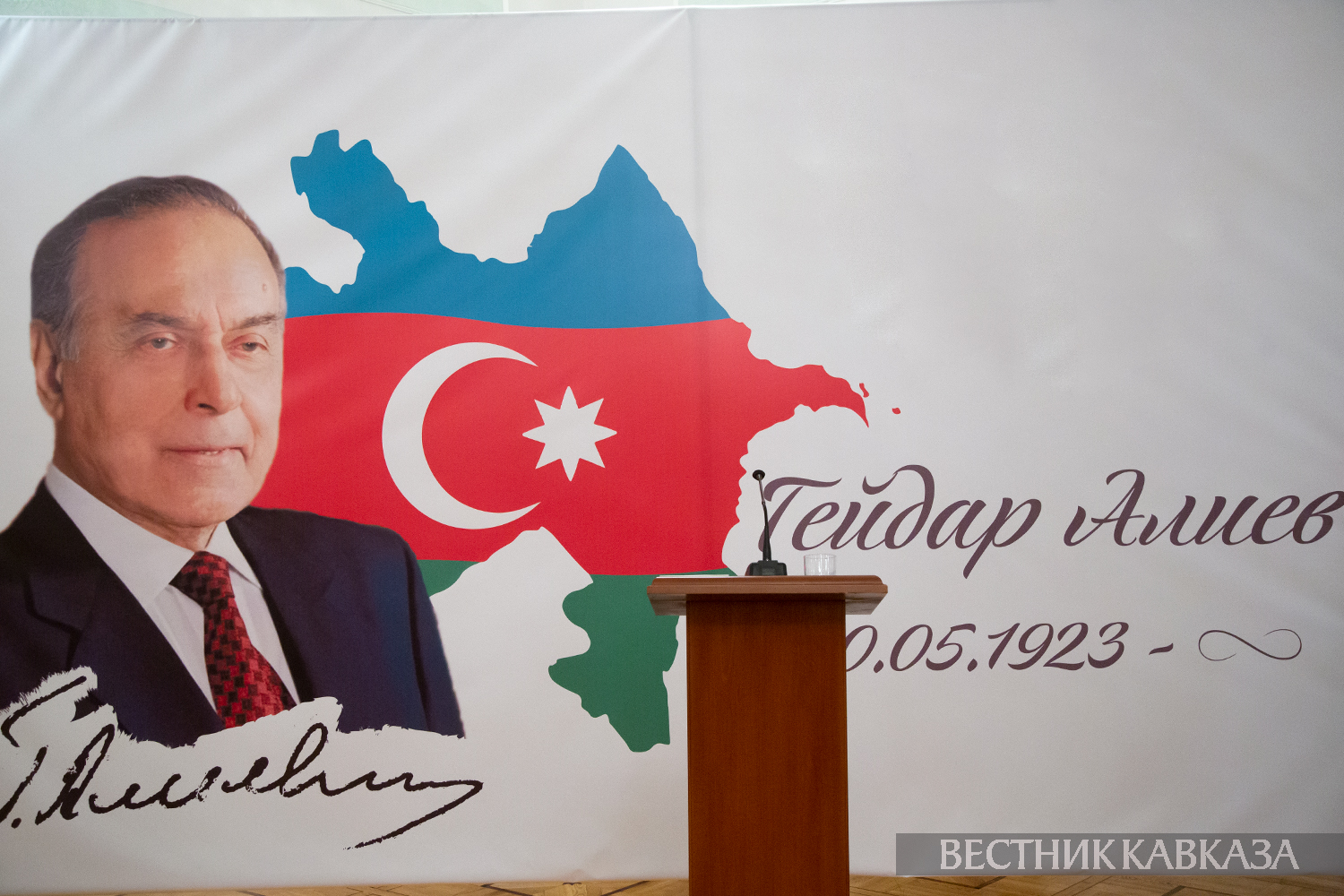
Today marks the 103rd anniversary of the birth of one of the most influential figures in modern post-Soviet history — Heydar Alirza oglu Aliyev, a native of Nakhchivan. During the Soviet era, Aliyev laid the foundations of modern Azerbaijan, and after the republic restored its sovereignty, he shaped the state as it is known today.
The Life of Heydar Aliyev
Aliyev graduated from the Nakhchivan Pedagogical College and, shortly before the Great Patriotic War, enrolled in the architecture department of the Azerbaijan Industrial Institute. During the war, he worked in the People's Commissariat of Internal Affairs and the Council of People's Commissars of the Nakhchivan ASSR. At the age of 21, he transferred to the state security agencies. He later received specialized higher education in Leningrad and graduated with a degree in history from Azerbaijan State University.
Aliyev served in the state security system for 25 years. From 1964, he was deputy chairman, and from 1967, chairman of the State Security Committee under the Council of Ministers of the Azerbaijan SSR, rising to the rank of major general.
In July 1969, the plenum of the Central Committee of the Communist Party of Azerbaijan elected Aliyev its first secretary, making him the republic's leader. In 1976, he became a candidate member of the CPSU Central Committee Politburo, and in December 1982, a full member. He was appointed First Deputy Chairman of the USSR Council of Ministers, overseeing key areas of the Soviet Union’s economic, social, and cultural life.
In 1987, Aliyev had to resign from all his posts in protest against General Secretary Mikhail Gorbachev's policies. During the "Black January" events of 1990, Aliyev was the first to publicly reveal the truth about the mass killings in Baku, demanding a fair trial for the organizers and perpetrators of the attack on Baku's civilians. A year and a half later, in July 1991, he left the Communist Party, protesting Gorbachev's support for Armenian separatism in Azerbaijan.
From July 1990, Aliyev returned to Azerbaijan, first to Baku and then to Nakhchivan. During this period, he became a member of the Supreme Soviet of Azerbaijan, Chairman of the Supreme Assembly of the Nakhchivan Autonomous Republic, then Chairman of the Supreme Council of the Republic of Azerbaijan, and finally Chairman of the New Azerbaijan Party.
In the summer of 1993, the people and authorities of Azerbaijan turned to Heydar Aliyev as the man capable of leading the country out of its political crisis. On June 24, he assumed the powers of the President of the Republic of Azerbaijan, and on October 3, he was popularly elected to the position. Within the first year of his presidency, Aliyev completely stabilized the situation in Azerbaijan: hostilities in the Karabakh war ceased, a ceasefire was established, and major oil corporations signed the landmark "Contract of the Century" with Baku for hydrocarbon production at the Azeri-Chirag-Guneshli block of Caspian oil fields.
Over two presidential terms, Heydar Aliyev laid the foundations for all subsequent achievements of the Republic of Azerbaijan, including the victory over Armenia in the Karabakh war and the restoration of the country’s territorial integrity. Until his death on December 12, 2003, Aliyev worked tirelessly for the benefit of Azerbaijan and is therefore rightfully regarded as the national leader of Azerbaijan.
Remembering Heydar Aliyev
Heydar Aliyev remains one of the most important figures in the history of both Azerbaijan and Russian-Azerbaijani relations. Accordingly, on his birthday, tributes are paid to him not only in Azerbaijan but also in Russia, highlighting his contribution to national state-building and to the formation of modern allied ties between Baku and Moscow after the collapse of the USSR. Vestnik Kavkaza spoke about Heydar Aliyev with Caucasus experts Dmitry Solonnikov, Konstantin Tasits, and Igor Korotchenko.
In an interview with a Vestnik Kavkaza correspondent, Dmitry Solonnikov, Director of the Institute of Contemporary State Development, emphasized above Heydar Aliyev's undisputed leadership. "Heydar Aliyev was the leader of Azerbaijan both during the Soviet era and after its collapse. He has mamy accomplishments for both Russia and the Soviet Union — thanks to his leadership, the Baikal-Amur Mainline was built and put into operation. In the 1980s, it was expected that Heydar Aliyev would eventually become Prime Minister of the USSR, had events unfolded as General Secretary Yuri Andropov planned. Even during the Soviet period, he had a very strong positive reputation", Solonnikov said.
"In the post-Soviet era, as soon as Heydar Aliyev was elected president of Azerbaijan, he first of all stopped the Karabakh war and restored order within the republic itself. From a country riddled with contradictions and a struggling economy — which Azerbaijan had been before his return to power — he transformed it into not only a sovereign but also a fully self-sufficient state. Under his leadership, construction of the Baku-Tbilisi-Ceyhan oil pipeline began, and all the foundations were laid for Azerbaijan to become an independent player in global politics, with its own voice and influence", the political scientist noted.
"Azerbaijan's leading position in the South Caucasus and the region's overall image were shaped by him. Heydar Aliyev is remembered today not only in Azerbaijan but also in Russia and other countries. It is simply impossible to overestimate his contribution to the history of the USSR and the post-Soviet space", Dmitry Solonnikov stressed.
"It's worth noting that Heydar Aliyev also shaped the formation of Russian-Azerbaijani relations. The establishment of relations between the two countries after the first years of Azerbaijan's independence — when Azerbaijani politicians demonstratively distanced themselves from Russia — is a credit to Heydar Aliyev, as he reversed the republic's foreign policy. Under Heydar Aliyev, Baku's ties with Moscow became constructive and businesslike. Subsequently, the positive personal contacts between Heydar Aliyev and President Vladimir Putin influenced the development of relations. The model of interaction he created was later adopted by President Ilham Aliyev", the Director of the Institute of Contemporary State Development concluded.
South Caucasus expert Konstantin Tasits described Heydar Aliyev as the founding father of the modern state of the Republic of Azerbaijan. "It was thanks to him that the war was stopped and the foundations of statehood were established in Azerbaijan after the collapse of the USSR. During his rule, major economic contracts were signed, which became the foundation for the growth of the well-being of Azerbaijani citizens. Overall, Heydar Aliyev stabilized the situation in Azerbaijan and set the course for the country's further development", he said.
"At the CIS level, Heydar Aliyev was one of the leading figures among the post-Soviet elites who came to power in the republics after the collapse of the USSR. In this capacity, he also interacted with the Russian authorities. It was the relationship between Vladimir Putin and Heydar Aliyev, which began in the 2000s, that set the course for rapprochement between Russia and Azerbaijan. Under his leadership, key cooperation agreements between the two states were concluded. Heydar Aliyev is a figure who is viewed quite positively in Russia", Konstantin Tasits noted.
Igor Korotchenko, editor-in-chief of National Defense magazine and a military analyst, discussed Heydar Aliyev's Soviet-era government service in more detail. "We remember Heydar Aliyev not only as a Soviet party and government figure, but also as a man who excelled during his years in the USSR's state security system, particularly as Chairman of the KGB of the Azerbaijan SSR. His leadership qualities were developed and shaped precisely in this area of work. According to existing assessments, as Chairman of the KGB of the Azerbaijan SSR, he distinguished himself as one of the best leaders in the system of republican organs of the State Security Committee of the Soviet Union", Korotchenko noted.
"In 1969, Heydar Aliyev became the head of the Azerbaijan SSR, and 13 years later, he was invited to the all-Union level, to the post of First Deputy Chairman of the USSR Council of Ministers. Major infrastructure projects, including the Baikal-Amur Mainline, are the result of Heydar Aliyev's work. After the Soviet Union ceased to exist, it was Heydar Aliyev who did much to build good and effective relations with the Russian Federation", the editor-in-chief of National Defense emphasized.
"Russian President Vladimir Putin has repeatedly noted Heydar Aliyev's contribution to Russian-Azerbaijani cooperation. Of course, in Russia, Heydar Aliyev is remembered both as a Soviet party leader and as the leader of an independent Azerbaijan. All assessments on this matter from official government and state bodies in Russia always emphasize his role, significance, and contribution to Russian-Azerbaijani relations", Igor Korotchenko concluded.





