
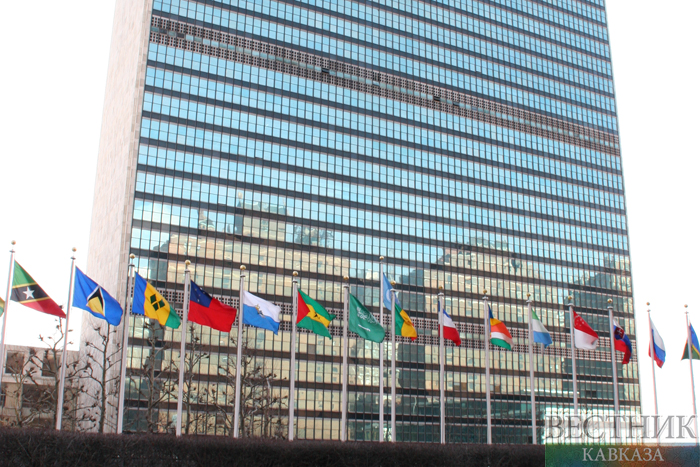
Azerbaijan actively contributes to global humanitarian efforts through its cooperation with OCHA and bilateral assistance provided by its governmental institutions, Azerbaijan’s Permanent Representative to the UN Tofig Musayev said at the General Discussion of the 2026 ECOSOC Humanitarian Affairs Segment.
While emphasizing that, since regaining independence, Azerbaijan has successfully transformed from a recipient of humanitarian aid into a donor country, the statement underscored that the post-conflict humanitarian challenges it continues to face - particularly those related to refugees and internally displaced persons, widespread destruction, missing persons, and mine contamination - remain pressing concerns.
At the same time, the diplomat stressed that Azerbaijan continues to face serious humanitarian challenges stemming from the destructive impact of past conflict.
"This includes approximately 300,000 Azerbaijani refugees from Armenia, more than 700,000 internally displaced persons from the formerly occupied territories, the widespread destruction in those areas, and the ongoing uncertainty surrounding the fate of over 4,000 missing persons," Tofig Musayev said.
The Permanent Representative also highlighted Azerbaijan's reconstruction efforts in the liberated territories and drew attention to the continued presence of mines and other explosive remnants.
"Azerbaijan has declared humanitarian demining as its 18th National Sustainable Development Goal. The scale of the mine threat requires stronger accountability, closer international solidarity and partnership, as well as increased support for national demining capacity and efforts," Tofig Musayev said.
In conclusion, Azerbaijan reaffirmed its commitment to the purposes and principles of the United Nations and to international efforts aimed at delivering effective, timely and principled humanitarian assistance to vulnerable populations.





